Different Facility Constraints, Same Performance Expectations
Why Ingredient Introduction Must Be Engineered for Real-World Conditions
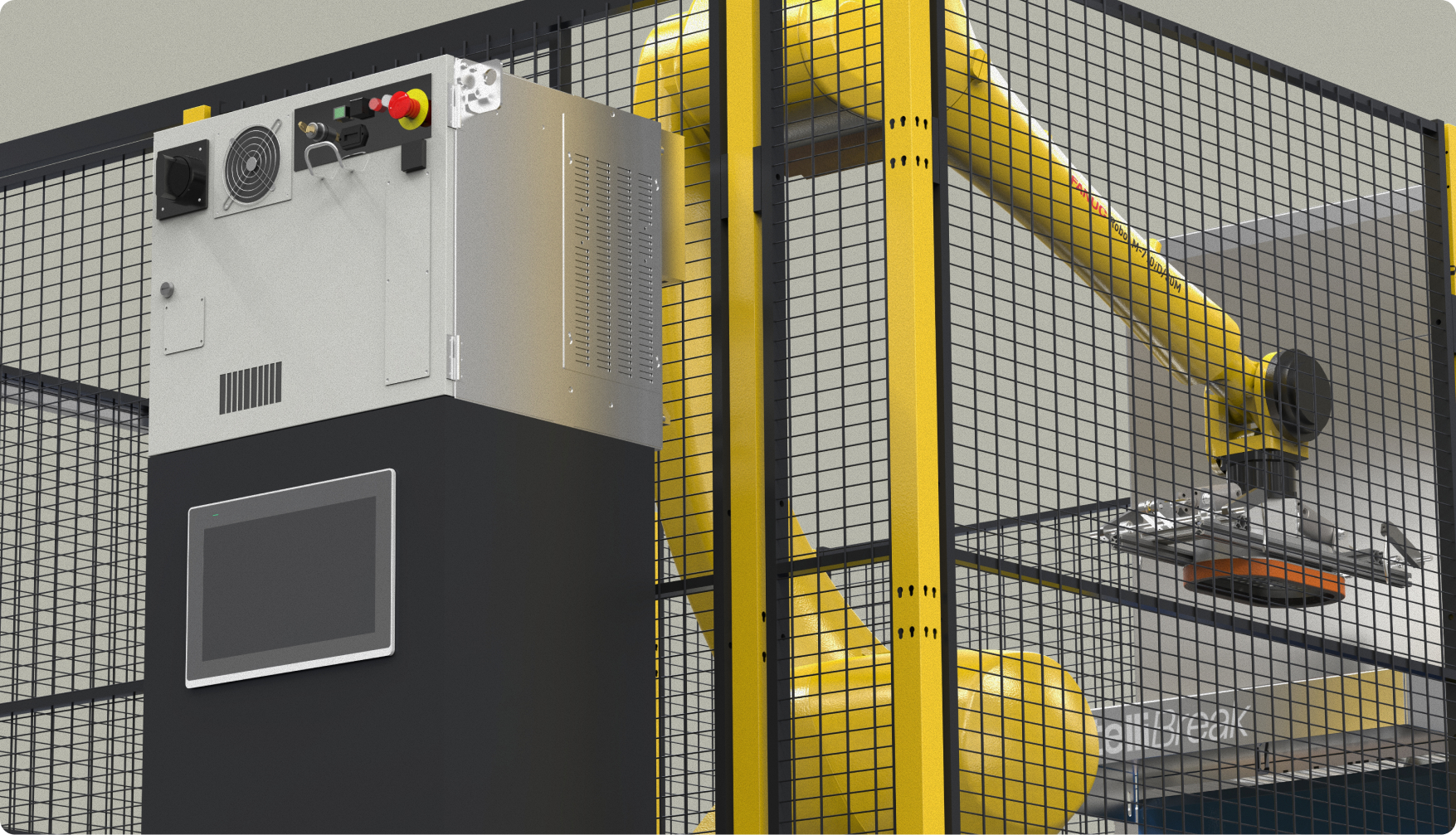
Manufacturing processes almost never run under perfect conditions. Each facility is unique, but the expectations for performance remain the same.
Plants across industries differ in labor requirements, space, older equipment, and automation. Still, everyone aims for predictable output, controlled processes, and reliable product quality.
The challenge? Most process variability doesn’t start downstream, it starts at the very beginning.
Ingredient introduction, specifically, bag breaking, is where consistency is either established or lost.
What Is Ingredient Introduction in Manufacturing?
Ingredient introduction is the point at which raw materials enter the production process, typically via manual or automated bag breaking, bulk bag unloading, or container dumping.
While often treated as a simple upstream task, this step directly affects material-flow behavior, feed-rate consistency, dust generation, operator exposure, and overall downstream system performance. When ingredient introduction is inconsistent, every subsequent process is forced to compensate, turning what should be a controlled system into a reactive one. In practical terms, variability at this stage becomes embedded into the entire operation, influencing efficiency, product quality, and safety outcomes.
The Reality: Manufacturing Is Operating Under Constraint
Today’s manufacturing environment is shaped by structural challenges that are not going away anytime soon. According to the National Association of Manufacturers and Deloitte, the industry may need as many as 3.8 million additional workers by 2033, with up to 1.9 million of those roles potentially going unfilled if current trends continue.
At the same time, job vacancy rates in manufacturing consistently hover around 4–5%, reflecting an ongoing labor gap rather than a temporary disruption. Compounding this, a 2024 report from The Manufacturing Institute found that more than 20% of manufacturers say labor shortages are directly limiting their production capacity.
The result is a fundamental shift in how processes are designed and executed. Instead of planning for perfect conditions, many systems are now built around the resources that are available, such as labor, space, or existing equipment. This is especially clear at the point where materials first enter the process.
Where Process Variability Begins: Bag Breaking
In many facilities, bag breaking isn't engineered as a controlled process, it’s adapted to the environment. It becomes dependent on operator technique, available labor, floor layout constraints, and how well it integrates with upstream and downstream equipment. This variability introduces inconsistencies before the material even reaches the next step. Feed rates fluctuate, material condition changes due to compaction or aeration, and dust is often released in an uncontrolled manner, increasing both safety risks and housekeeping challenges.
According to the Occupational Safety and Health Administration, uncontrolled dust exposure remains a significant concern in manufacturing environments, contributing to both health risks and combustible dust hazards. When variability and dust are introduced at the start, downstream systems are forced to adjust, often leading to inefficiencies, increased equipment wear, and inconsistent output.
Why Facility Constraints Increase Variability
No two manufacturing facilities operate under identical conditions.
One plant may have:
- Experienced operators
- Ample space for controlled handling
- Higher levels of automation
Another may be dealing with:
- Labor shortages
- Tight footprints
- Manual processes tied to legacy systems
Even when processes look identical on paper, execution varies significantly.
Over time, this creates:
- Process drift across facilities
- Inconsistent product quality
- Increased operator intervention
- Reduced scalability
This variability is not by accident. It is built into the system because of constraints.
Standardizing Performance Across Different Facilities
Standardizing manufacturing does not mean every facility must have the same layout or way of working. Instead, it means making sure key steps, especially ingredient introduction, work the same way regardless of real-world constraints, such as labor, space, or older equipment. To do this, companies need to stop just adapting to what they have and start designing systems that can perform the same way within those limits.
As highlighted by the National Institute of Standards and Technology, process consistency and standardization are foundational to improving quality, scalability, and operational efficiency across manufacturing environments. Without consistency at key control points, variability becomes systemic, making it difficult to scale operations or maintain uniform product outcomes across multiple facilities.
The Role of Automation in Ingredient Introduction
This not only enhances process control but also supports safer working conditions and more predictable downstream performance. According to the International Society of Automation, implementing automation in material-handling and processing environments improves repeatability, reduces human error, and increases overall system reliability.
For ingredient introduction, this means creating a controlled, repeatable starting point that aligns well with both earlier and later steps. The goal is not just to boost efficiency, but to control a step that has often caused variability. Once this control is in place, the whole process becomes more stable, scalable, and easier to improve.
IntelliBreak: Standardizing Bag Breaking Across Facilities
Automated bag-breaking systems like IntelliBreak are designed to introduce consistency at the very first step of the process.
They enable:
- Consistent ingredient introduction independent of operator technique
- Dust containment at the source, improving safety and cleanliness
- Flexible integration into different layouts and workflows
- Repeatable performance across multiple facilities
The result:
- A standardized starting point
- More predictable downstream processing
- Reduced reliance on variable labor resources
Why Controlling Ingredient Introduction Matters More Than Ever
With ongoing labor shortages and facilities needing to do more with fewer resources, how materials enter your process is no longer a small detail. It is now a competitive advantage. If the ingredient introduction is inconsistent, every step after it has to be adjusted.
The reality is simple: you cannot scale inconsistency, you cannot optimize what is not controlled, and you cannot fix downstream problems that start upstream.
The facilities that are succeeding today are not the ones with perfect conditions. They are the ones who design around real-world limits while still keeping control at key points in the process.That starts here.
Ready to Take Control of Your Process?
If bag breaking is still a manual, variable step in your operation, it may be time to rethink how your process begins.
Want to see what that could look like in your operation? Let’s talk about your process, your constraints, and how IntelliBreak can help you take control from the start.
Book a demo
Send us your material to test
